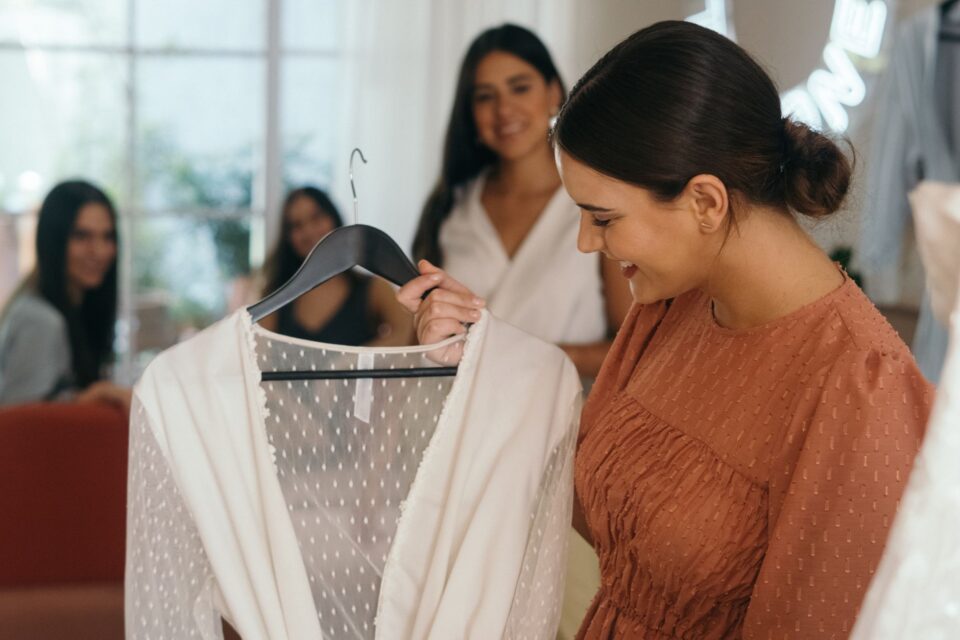
I wrote this guide because wedding dress styling tips only help if they hold up under real timelines, real weather, real nerves, and real dancing. I’ve watched brides light up when a small tweak solved a big problem, and I’ve also seen gorgeous gowns wilt because no one planned for the hem, the wind, or the shoe change. My goal is simple: give you wedding dress styling tips you can use from the first fitting to the last dance, so your look feels like you and stays polished all day.
Wedding Dress Styling Tips: The One-Page Checklist
Before we get into the how and why, here is the fast, keep-me-honest list I wish every bride had on the fridge from day one. Print it, screenshot it, share it with your maid of honor. Then we’ll walk through each part in detail.
- Pick the vision: three words that define your look (for example: airy, tailored, luminous).
- Choose silhouette and fabric that match your setting and movement needs.
- Book fittings early; lock an alterations timeline with buffer.
- Set your heel height and hem plan before your second fitting.
- Test undergarments and shapewear with the actual dress, in daylight and flash.
- Build an accessories capsule that can flex from ceremony to reception.
- Decide your veil or no-veil path; rehearse hair with and without it.
- Coordinate the color story across bouquet, makeup, and bridal party.
- Pack a day-of kit: steamer access, lint roller, fashion tape, mini sewing kit, stain swabs.
- Write a weather and venue plan: heat, wind, rain, uneven floors.
- Rehearse your bustle and five key movements: sit, hug, spin, step up, step down.
- Make a photo plan: must-shoot details of dress, veil, shoes, buttons, and train.
- After-party swap or overskirt removal ready, plus after-care drop-off plan.
Start With Silhouette, Fabric, and Movement
Every great bridal look starts with three anchors: silhouette, fabric, and movement. I like to ask for three words first because they keep decisions tight. If your three words are airy, tailored, luminous, then a crinkle chiffon A-line with clean seams and a pearly sheen will feel right. If your words are architectural, modern, confident, then a structured mikado fit-and-flare or a clean sheath in double-faced satin will carry that mood without extra fuss.
Silhouette and fabric aren’t just about style; they are about physics. Chiffon floats when you walk. Organza holds volume with little weight. Crepe drapes close to the body and loves clean lines. Mikado and silk faille keep sculptural shapes. Lace varies wildly: chantilly is light and romantic, guipure is graphic and bold. Try stepping, sitting, and hugging in every fabric you are considering. If you’re outdoors, ask to stand near a door or fan and feel how the skirt moves; wind plus tulle can be charming in photos, but it also wants to snag on bouquet greenery or beaded belts.
Movement matters for your venue too. A cathedral aisle with smooth floors gives you freedom for length. A garden with gravel or a lawn asks for a walkable hem and a firm underskirt. A downtown loft with stairs begs for a bustle you can handle fast. Think of movement as part of your style statement: the way your dress sways is part of how your guests will remember you.
If you want a deeper primer on shapes and how they flatter different preferences, bookmark the site’s silhouette guide: The ultimate wedding dress up guide: silhouettes, fit and style. It’s a great map before you book try-ons.
Fit Mechanics and Your Alterations Roadmap
Great styling falls apart if fit is an afterthought. Build an alterations roadmap the day you purchase your gown. I like this cadence:
- First fitting: 8–12 weeks before the wedding. Confirm undergarments, heel height, and any customization notes. Flag any friction points (armholes, boning edges, closures).
- Second fitting: 4–6 weeks out. Hem pinning typically happens here once shoes are confirmed. Start discussing bustle options and their look from the side and back.
- Final fitting: 1–2 weeks out. This should be a confirmation pass. Practice the bustle. Sit, stand, raise arms, hug, and walk in a hallway or outside if possible.
Smart fit checks:
- If your dress has structure at the bodice, make sure it supports you without relying on straps. Straps should hold placement, not weight.
- If your gown is unstructured, consider a lightweight interior corset or cups to keep lines smooth under flash.
- Back closures must feel secure. Invisible zips should glide; hook-and-eyes shouldn’t snag veils or hair.
- Ask the tailor to blunt or pad any boning tips that rub. A single scratch can distract you more than you think.
If you plan to customize the neckline, sleeves, or overskirt, give your seamstress time to test the change in muslin. For inspiration on tasteful tweaks that add meaning without overdoing it, explore Give Your Wedding Dress a Personal Touch: Customize It! and collect ideas before the first fitting so your team has a clear direction.
Undergarments, Shapewear, and All‑Day Comfort
Even the best dress needs the right base layer. Bring options to the first fitting and test them in daylight and with phone flash. Your checklist:
- Match the silhouette: plunge bras pair well with deep V necklines; longline bras suit strapless styles; seamless high-waist shorts support fitted skirts.
- Color matters: nude-to-you tones disappear better than stark white under most fabrics.
- Seams and grippers: feel for ridge lines or silicone strips that may show or feel sticky under heat.
- Breathability: if your wedding is in warm weather, pick lightweight fabrics and wear them during a dance rehearsal at home to check for comfort.
Many brides skip shapewear and rely on the gown’s built-in structure. That’s completely valid. Comfort is part of style; if you breathe easier and move freely, you look better. If you do use shapewear, the piece should feel like a supportive layer, not a constraint you think about all day. Pack a backup bra or straps in your day-of kit in case sweat or hairspray affects grip.
Shoes, Hem Strategy, and How to Stand Tall
Shoes are style and engineering. Decide heel height early to set your hem accurately. If you love stilettos for the ceremony and block heels or flats for the reception, tell your tailor. You have three main strategies:
- One height all day: simplest. Hem is precise for that shoe.
- Two heights with an invisible lift: ask for a tiniest extra length and a slightly stronger crinoline so the skirt doesn’t pool when you switch to flats.
- Reception-ready bustles: for heavy skirts, a bustle can lift the hem off the floor, which pairs nicely with a lower shoe later.
Test how your shoes behave on expected surfaces: aisle runners, polished wood, terrazzo, lawn, stone. Add clear non-slip pads and break in the shoes during two at-home sessions while wearing socks to soften edges. Video yourself walking away and turning; check that your stride looks balanced, not cautious. Style is confidence amplified by comfort.
Veils, Jewelry, Hair Pieces, and Balance
This is where many looks tip from considered to crowded. My rule: pick one primary statement and two secondary accents at most. If your veil is cathedral length with lace edging, keep earrings delicate and skip a heavy necklace. If you wear bold drop earrings and a sleek bun, a fingertip veil or no veil maintains balance. Try the whole set together at your hair trial, then walk, turn, and hug a friend while wearing a coat or blazer to mimic guest interactions. Does anything snag? Does your head feel pulled when the veil tugs slightly? Adjust before the big day.
For deep dives on options and pairings, the site’s accessories guide is a goldmine: The Ultimate Guide to wedding dress accessories (2026). You can also layer inspiration with the editorial perspective in Create a Wedding Day Look to Remember: The Power of Bridal Accessories if you need help choosing your hero piece.
Your Color Story: Whites, Undertones, and the Party Palette
Not all whites read the same. Bright white leans cool and crisp, ivory warms the skin, and champagne adds a gentle glow. The fastest way to test the right tone is to stand near natural light with your dress, a white sheet of paper, and a smartphone. Compare the dress to the paper. If the dress looks blue or gray next to a stark white sheet, lean warmer in makeup and flowers. If the dress looks creamy, steer makeup toward soft neutrals and keep florals from going too yellow.
Think of your bouquets and bridesmaids as supporting actors. The color story should make your dress feel intentional. If your bridal party wears muted sage or dusty mauve, a bright white dress will pop; an ivory dress will feel seamless and soft. Consider the groom’s suit tone too: deep navy sharpens bright white; mid-gray loves ivory; black is timeless with almost anything but can feel stark with champagne unless you add warmth in boutonnières and pocket squares.
Ask your photographer how the colors will render in your venue. Some LED lighting can shift tones slightly. Bring a swatch of your dress fabric to a makeup trial so foundation and blush work with your undertone, not against it.
Season, Venue, and Weather Plans
Your dress should thrive in your setting. A winter ballroom wants heavier fabrics that hold their shape and read rich under chandeliers. Summer garden parties ask for airflow. Long sleeves can still be airy in silk organza; off-the-shoulder necklines balance coverage with breeze. If your ceremony is outside, plan for wind. Simple tricks help: a tiny hidden comb in a blusher layer, extra bobby pins in your train to secure a temporary fold during photos, and a veil that detaches with one gentle tug when gusts pick up.
Heat calls for breathable linings, dabbing cloths, and a friend who watches for shine before key moments. Cold calls for a wrap that matches the dress tone and texture. Hardwood floors call for non-slip pads; lawns favor wedges or heel protectors. If you have stairs, practice carrying your train and breathe while doing it. It sounds obvious until you try it in a fitted dress with guests watching. Rehearse the exact staircase once if you can.
Destination Weddings: Packing, Arrival, and Quick Fixes
Packing a gown gets easier with a plan. Use a breathable garment bag with wide shoulders. Pad delicate areas (beaded lace, appliqués, buttons) with acid-free tissue. Hang the dress high in transit if possible. If it must be folded, fold along seam lines rather than creating new creases, and cushion folds with tissue. Carry on if airline rules allow; otherwise, confirm with your planner or hotel about safe storage on arrival.
Upon arrival, hang the dress in a dry, clean space. Steam from the inside out if your fabric allows, testing a hidden area first. For delicate laces, light steaming and gravity do wonders. Bring a small handheld steamer and coordinate with your stylist or planner for access to outlets. Have a mini kit ready: clear fashion tape, safety pins, thread, a needle, spare hook-and-eye, a soft brush for stray lint, and alcohol-free wipes for unexpected marks on non-silk areas. If you want a destination-specific styling plan—from dress codes to footwear—this piece helps with the full picture: Dress for the Occasion: Tips for Styling a Destination Wedding.
Groom and Bridal Party Coordination
Styling isn’t just the dress. It’s the overall composition. I like to start by listing what can’t change: the dress silhouette and fabric, the venue architecture, and the season. Then shape everything else around that. For a sleek crepe column in a modern venue, black tuxedos and minimal bouquets look timeless. For a romantic lace A-line at a vineyard, softer suits in mid-blue or textured charcoal, and loose bouquets with movement, feel right.
If you are managing different body preferences in the party, pick one unifying detail—neckline shape, fabric type, or color family—and let the rest flex. On photos, unity reads from a distance; exact matches don’t matter as much as people think. Invite the groom to coordinate cufflinks or a pocket square with your jewelry tone if you wear metallics. Ask the party to do a quick test photo the week before, ideally in daylight, so any outlier colors can be swapped easily.
Going Minimal or Maximal: Finding Your Edge
Every bride faces the same fork: add one more thing or take one away. The right answer depends on your edge. Minimal doesn’t mean plain; it means disciplined. A clean silk faille ballgown with no embellishment, a sharp middle part bun, and a single pair of diamond studs can feel powerful and serene. Maximal doesn’t mean busy; it means intentional. An embellished corset, detachable overskirt, gloves, and a cathedral veil can sing if each layer has a role and the proportions stay in harmony.
Use the mirror-swap test: put on everything you planned, take a full-length photo, then remove one element and take another. Which image carries your story better? The one that feels like you without explanation is the path. And if you plan a style change for the reception—hair down, overskirt off, statement earrings on—rehearse it with a timer. Can your maid of honor and stylist do it in ten minutes without stress? Time decides.
Customization With Meaning
Customization can turn a beautiful dress into your dress. Embroidered initials inside the bodice. A tiny blue bead stitched under the skirt. Floral appliqués from a family gown placed along your neckline. A detachable sleeve that mirrors the lace in your veil. These touches don’t have to show to matter. They often matter more because they’re for you.
Before committing, ask three questions: does this change serve comfort, storytelling, or structure? If it does none of those, it might be decoration that complicates fittings. If it does one, go for it. Again, the article Give Your Wedding Dress a Personal Touch: Customize It! is packed with ideas that balance style and practicality.
Hair, Makeup, and The Dress
Great styling happens where beauty and wardrobe meet. Bring your dress photos and fabric swatch to the hair and makeup trial. In bright light, try two levels of polish: ceremony (slightly refined) and reception (a touch bolder). If your neckline is high or detailed, hair up lets the architecture breathe. If your neckline is simple, soft waves add movement. For makeup, consider how your dress reads in photos: shiny satins and glossy lips together can stack shine; matte fabric with a luminous foundation can glow under evening lights.
Do a 30-minute test: put on the trial makeup, wear a white tee or robe, move in and out of shade, and film a 10-second clip walking toward a window. Watch it on your phone and a laptop. Does anything feel too strong or too soft? Adjust now, not on the day.
Day‑Of Logistics: The Kit, The Timeline, and The Bustle
Here is the practical side that keeps style intact when the schedule gets busy.
Day-of kit essentials:
- Handheld steamer and a backup plan if there is no outlet.
- Lint roller, soft brush, and microfiber cloth.
- Clear fashion tape, safety pins, mini sewing kit, spare hook-and-eye.
- Cotton swabs, blotting papers, small scissors, alcohol-free wipes for non-silk areas.
- Heel pads, bandage strips for hotspots, and a straw for hydration without smudging lipstick.
Timeline notes:
- Steam early, then let the dress hang. Touch up just before photos.
- Get into the dress with clean, dry hands and a robe off the shoulders.
- Do a five-movement check: sit, spin, step up, hold the bouquet, hug. If something catches, fix it now.
- Assign a bustle captain and a backup. Record a 60-second video at your final fitting, and print a one-page cheat sheet with numbered loops.
The bustle is a tiny engineering project. French, American, Austrian, and hybrid options all change the look slightly. Decide whether you want the train to lift under or over, and how the silhouette should read from the side during toasts. Practice twice. Your future self will thank you when the dance floor opens and you forget about it.
Photography, Video, and Capturing the Dress
Photos live forever, so style for the lens as well as the eye. Share a concise shot list with your photographer and planner. Include details like the buttons, boning, lace motifs, and your shoes. Ask for one natural light portrait that shows the fabric texture and one backlit shot that shows the silhouette. If your veil is your signature, plan a short sequence just for veil movement; it takes less than three minutes and gives you magic for decades.
Consider how your dress behaves at golden hour. Some fabrics glow; others flatten. If your timeline allows, ask for two minutes to step outside and twirl. For indoor evenings, check how your bodice reflects flash—micro-sequins may sparkle beautifully, while high-gloss satin can reflect hotspots. Neither is bad; they just ask for angle awareness. Let your photographer guide you, then relax into it.
After‑Care: Cleaning, Storage, and Long‑Term Love
Plan after-care before the wedding so the handoff is easy. Ask a trusted friend to place your dress in its garment bag after the reception and keep accessories together in a labeled tote. The sooner you schedule professional cleaning with a reputable service experienced in bridal fabrics, the better your results tend to be. Share fabric details, lining type, and any notes about the day (grass, makeup, wine) so the service can select an approach that suits the textile. Avoid storing the gown in plastic long term. A breathable bag with acid-free tissue helps the fabric rest comfortably.
If you want the option to wear parts of your look again, store detachable sleeves, belts, and overskirts separately and photograph them with notes about pairings. You can save accessories for anniversaries, style them with occasion outfits, or hand them down. Style doesn’t end on the big day; it becomes part of your story.
Putting It All Together
If I had to distill everything into one approach, it’s this. Name the feeling you want from your wedding day look. Pick a silhouette and fabric that make that feeling easy. Build comfort into every choice, from heel height to bustle to backups. Keep a tight accessory edit with one lead. Rehearse the unglamorous movements until they feel natural. Share your plan with your team, then let the day carry you. You’ve done the work. Your dress won’t just look beautiful; it will behave beautifully, which is the secret nobody talks about when they say a look feels effortless.
Use the checklist up top, lean on the deep dives in the guides I linked, and trust your taste. A well-styled look doesn’t shout; it supports you quietly while you live one of your favorite days.